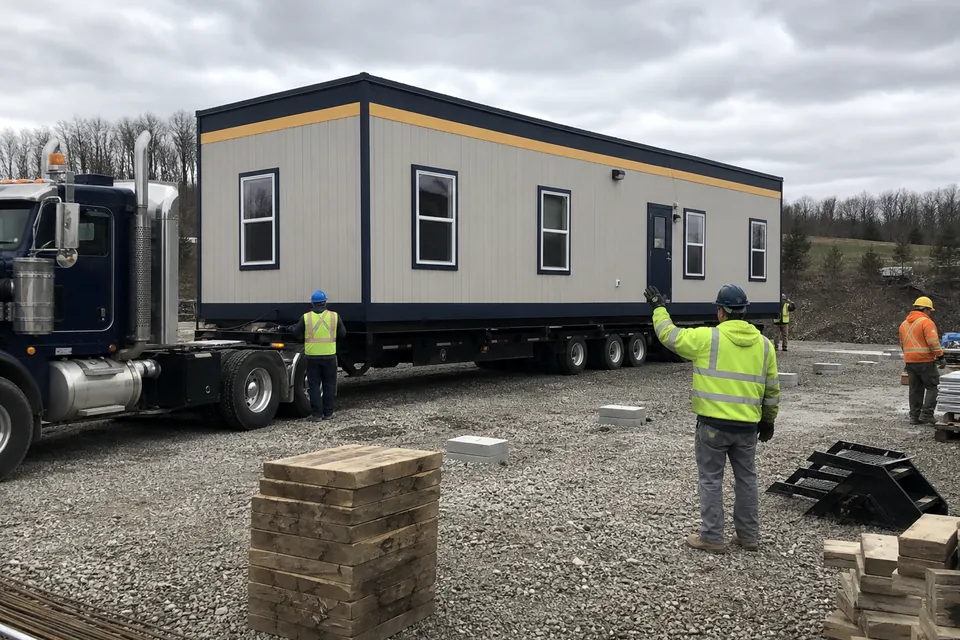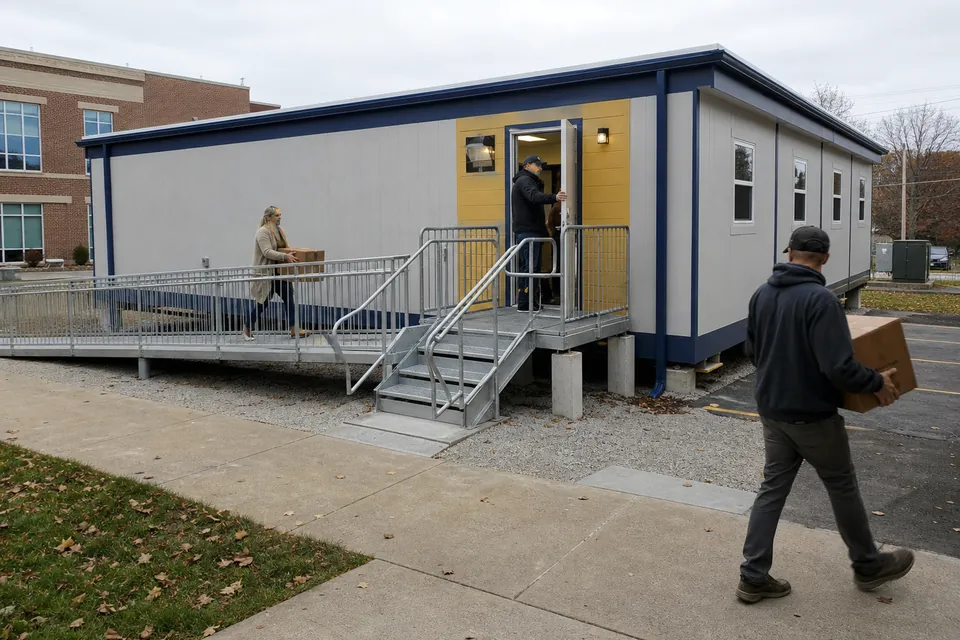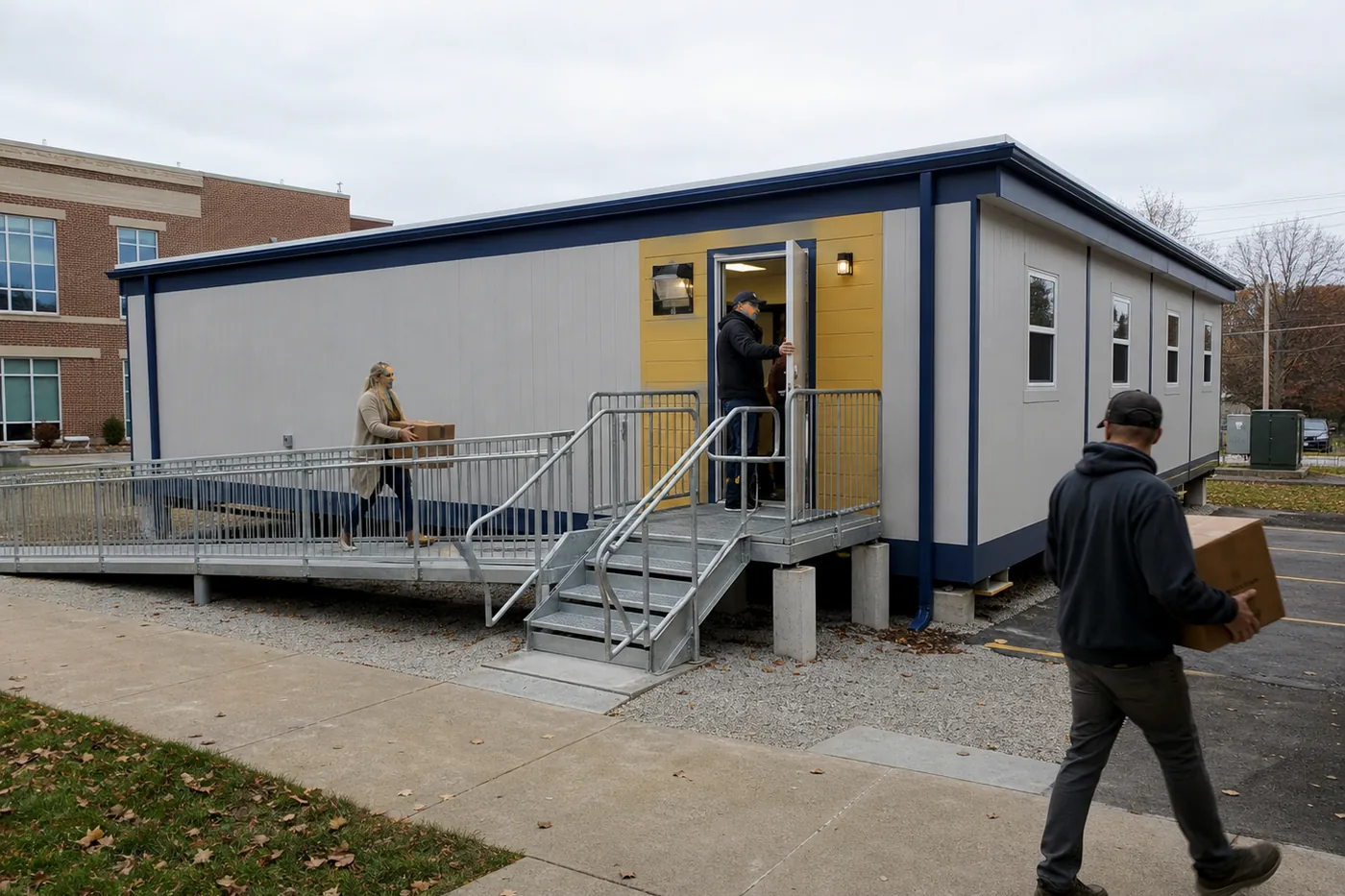
Two-section mobile offices for larger teams, meeting rooms, break areas and operations that need a less narrow interior than a single-wide trailer.
Who should consider double-wide mobile offices?
A mobile office works best when its role is stated plainly: who uses it, what happens inside, how long it stays, and which services the site can provide. That brief prevents a buyer from choosing a familiar trailer size that later feels cramped, lacks privacy, or requires unplanned utility work. Common fits for this category include:
Start with the workday, not the trailer catalog.
List peak staff, visitor traffic, desks, meetings, storage, records, plan tables, changing space, breaks and private conversations. Measure furniture and equipment. Decide whether people need one shared room or doors between functions. For double-wide mobile offices, buyers should resolve these layout priorities before requesting prices:
- Module seam and interior layout
- Meeting and collaboration capacity
- Separate departments or functions
- Accessible entries and circulation
Give suppliers one clear mobile-office brief.
Share the delivery ZIP, use, size range, term, occupancy, features and preferred arrival date.
Plan the site and services before dispatch.
Confirm the carrier’s final approach, gate width, turning room, overhead clearance, ground conditions and the position where the office will sit. The location should support leveling, anchoring or tie-down requirements, safe stairs or ramps, drainage away from the unit and practical access for users. Coordinate power, data, water and waste where the selected unit needs them. These items deserve early attention:
- Multi-section installation
- Larger HVAC and electrical loads
- Plumbing and restroom coordination
- Foundation supports, leveling and weather seals
Rent, purchase or compare both?
Rental can fit a defined project, seasonal demand or a changing site. Purchase may suit recurring deployments, longer use or a business that can manage storage, transport and maintenance between assignments. A used unit can offer value when its condition, records and repair scope are documented. Compare the expected period of use, delivery in and out, monthly charges, minimum term, site work, damage responsibilities, maintenance and end-of-term requirements—not monthly rent alone.
What belongs in a complete double-wide offices price?
Ask for the unit, selected layout and features, delivery distance, permits or escorts if required, setup, blocking and leveling, anchoring, steps or ramps, utility connections, recurring rent, taxes and fees, maintenance responsibilities, pickup, cleaning, damage terms and any minimum commitment. For a purchase, add title or ownership paperwork, condition documentation, warranties and the cost of moving the unit when the assignment ends.
Questions to ask before accepting a proposal
- 01
Does the team need one large room or several offices?
- 02
Can two sections reach and stage at the site?
- 03
Who completes the marriage-line work?
- 04
Would a permanent building be better for a longer need?
Compare suppliers on the details that affect opening day.
A useful proposal identifies the specific unit or acceptable condition, floor plan, dimensions, features, source location, expected availability, delivery assumptions and responsible parties. Ask who handles site readiness, setup, service calls and pickup. Keep every supplier on the same written scope so a lower first number does not conceal missing stairs, difficult access, restroom servicing or a second freight charge.