Support, anchoring, tie-downs, drainage and severe-weather procedures should follow the unit, site conditions, manufacturer information and applicable local requirements. Generic assumptions are not enough.
Plan the connected decisions: construction office trailers, mobile offices for business, portable classrooms, church & daycare mobile offices. Use the matching mobile office buyer’s guides, then resolve rental maintenance, mobile office insurance, mobile office lead time and comparing suppliers before comparing complete project quotes.
Location-Specific Wind and Weather Criteria for Mobile Offices
Wind, flood, frost, snow, soil and exposure conditions differ. Ask which data and requirements apply to the delivery address and whether the offered unit and setup can meet them. Do not transfer an anchoring assumption from another state or site.
Mobile Office Supports, Anchors and Ground Conditions
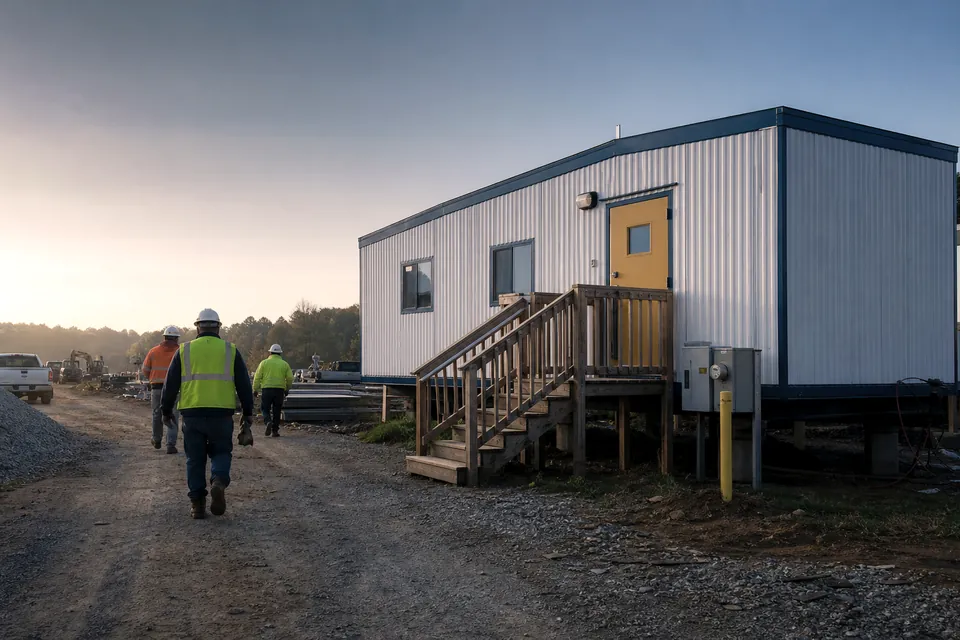
The setup must provide stable bearing, level support and resistance required for the unit and location. Underground utilities, pavement, rock or weak soils can affect anchor selection and placement. Resolve the method before delivery.
Mobile Office Drainage, Roof and Weather-Sealing Checks
Grade and drainage should move water away from supports and entries. Inspect roof, windows, doors, seams and—in a double-wide—field connections. Assign response for leaks, frozen lines and storm damage.
Severe-Weather Procedures for Mobile Office Occupants
A mobile office is not automatically a storm shelter. Identify trusted alerts, shutdown triggers, document protection and the approved place occupants will go during severe conditions. Follow emergency-management guidance for the locality and worksite.
Wind And Weather Planning by Mobile Office Type and Project Use
Wind and weather planning cannot be evaluated apart from the people, property and length of need. A construction team, classroom, business office and customer-facing service use the same trailer differently. Test the answer against the actual workday, floor plan, utility needs and delivery address.
Construction Office Trailers
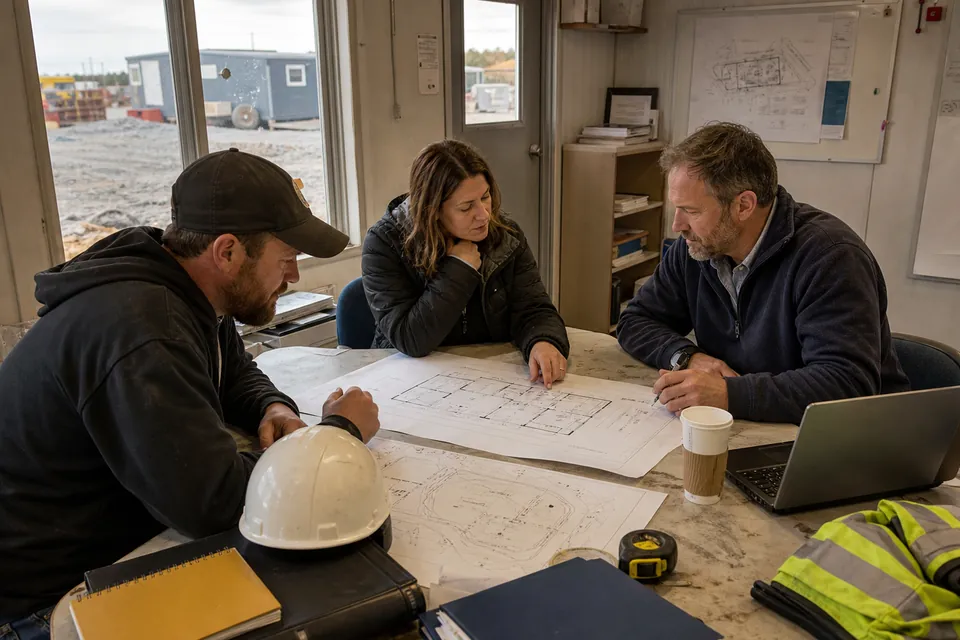
Mobile construction offices for superintendents, project managers, safety teams, meetings, records and daily jobsite coordination. For this use, test clear sightlines toward active work and private meeting and document areas while coordinating reliable power and data service and heating and air conditioning. Those requirements belong in the same decision record as the answer above.
Portable Classrooms
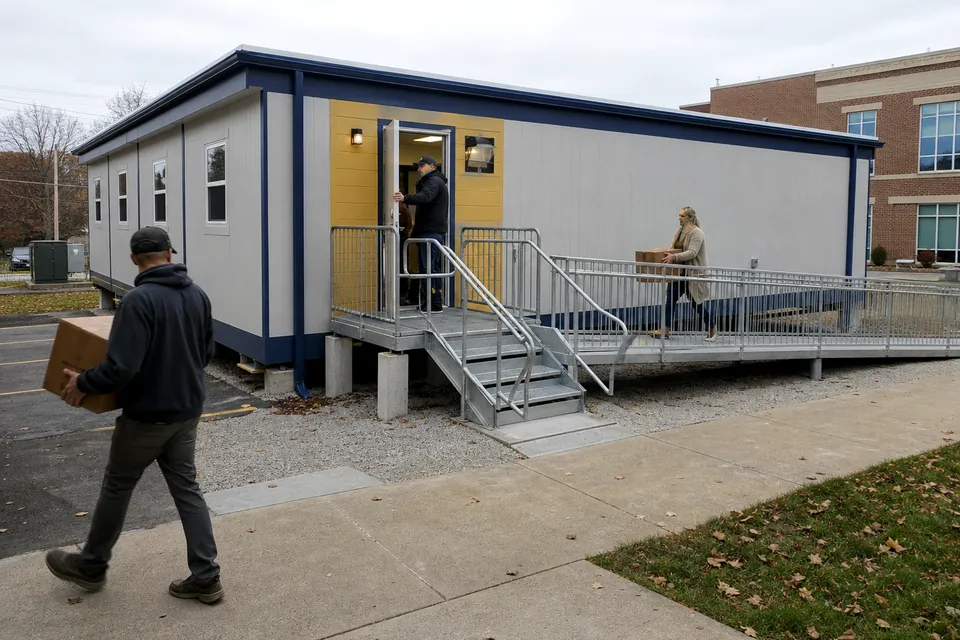
Mobile and relocatable classrooms for schools, training programs, childcare providers and organizations managing enrollment or renovation needs. For this use, test age-appropriate room capacity and supervised campus circulation while coordinating hvac and indoor comfort and instructional power and data. Those requirements belong in the same decision record as the answer above.
Single-Wide Mobile Offices
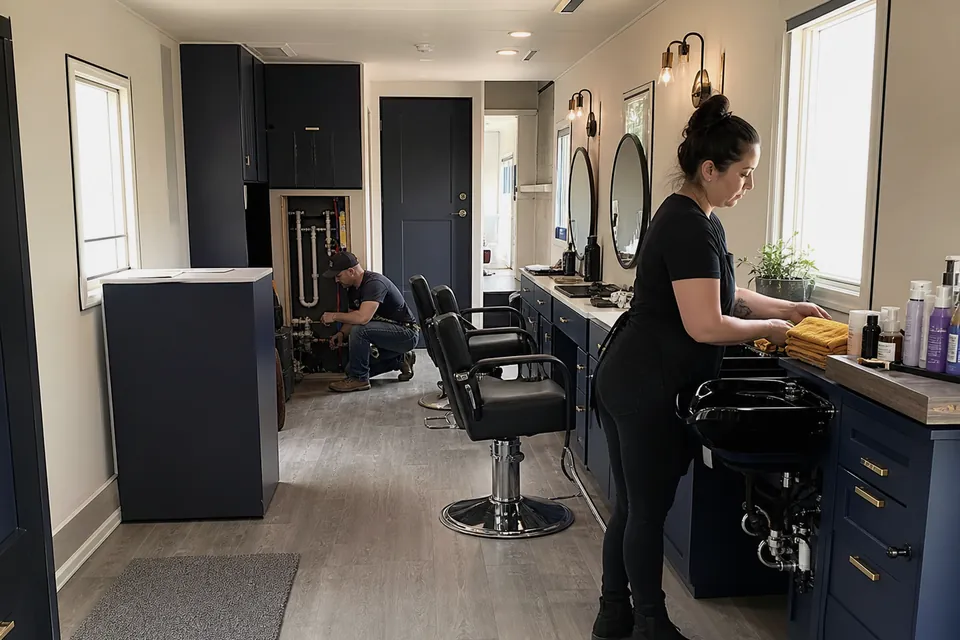
Single-wide mobile offices in a range of common lengths for small and mid-size teams needing fast, self-contained temporary workspace. For this use, test team size and room separation and desk, table and storage layout while coordinating hvac, power and lighting and optional restroom and plumbing. Those requirements belong in the same decision record as the answer above.
Double-Wide Mobile Offices
Two-section mobile offices for larger teams, meeting rooms, break areas and operations that need a less narrow interior than a single-wide trailer. For this use, test module seam and interior layout and meeting and collaboration capacity while coordinating multi-section installation and larger hvac and electrical loads. Those requirements belong in the same decision record as the answer above.
Documenting wind and weather planning in the Mobile Office Quote
Record the decision, the facts supporting it, the person responsible for confirmation and the date when it must be complete. Identify whether the item is verified, assumed, allowed for or unresolved. Connect it to the floor plan, proposal, site-readiness list, delivery date and agreement term so suppliers and buyers are working from the same basis.
When proposals arrive, require every provider to respond to the same documented position on wind and weather planning. A response should state what is included, what another party must supply, which information can change the answer and how a change affects price or time. If an item cannot yet be fixed, label the allowance and the evidence required to replace it with a firm value. Silence should not be treated as inclusion.
Mobile Office Quote Record for wind and weather planning
| Record item | How it supports the decision |
|---|---|
| Local wind and weather criteria | State the current basis, accountable party, required date and effect on building, property, pricing and occupancy. |
| Support and anchor design basis | State the current basis, accountable party, required date and effect on building, property, pricing and occupancy. |
| Drainage and envelope inspection | State the current basis, accountable party, required date and effect on building, property, pricing and occupancy. |
| Service and damage responsibility | State the current basis, accountable party, required date and effect on building, property, pricing and occupancy. |
| Occupant severe-weather plan | State the current basis, accountable party, required date and effect on building, property, pricing and occupancy. |
Carry this record into concept review, proposal comparison and the preconstruction handoff. Update it whenever the use, property, equipment, code path or opening target changes. The goal is not more paperwork; it is one traceable answer that the building and site teams can execute without relying on different assumptions.
BUYER CHECKLIST
Mobile Office Supplier Questions About wind and weather planning
- Local wind and weather criteria
- Support and anchor design basis
- Drainage and envelope inspection
- Service and damage responsibility
- Occupant severe-weather plan